HEAR: the human side of transformation
Human Experience Architecture and Research. The framework and the thinking behind it.
Originally written September 27, 2024.
Before going any further, we need to agree on one thing. It’s that we as humans are pretty simple and really only want two things:
 Have experiences (usually shooting for good ones).
 Share the building and emotions of those experiences with each other.
Either you agree with that, or you don’t and the rest of this talk will hopefully make you a believer.
That is where HEAR starts. Products and services are vehicles for accomplishing those two things. Their value comes from the experiences they enable and what someone can do with them.
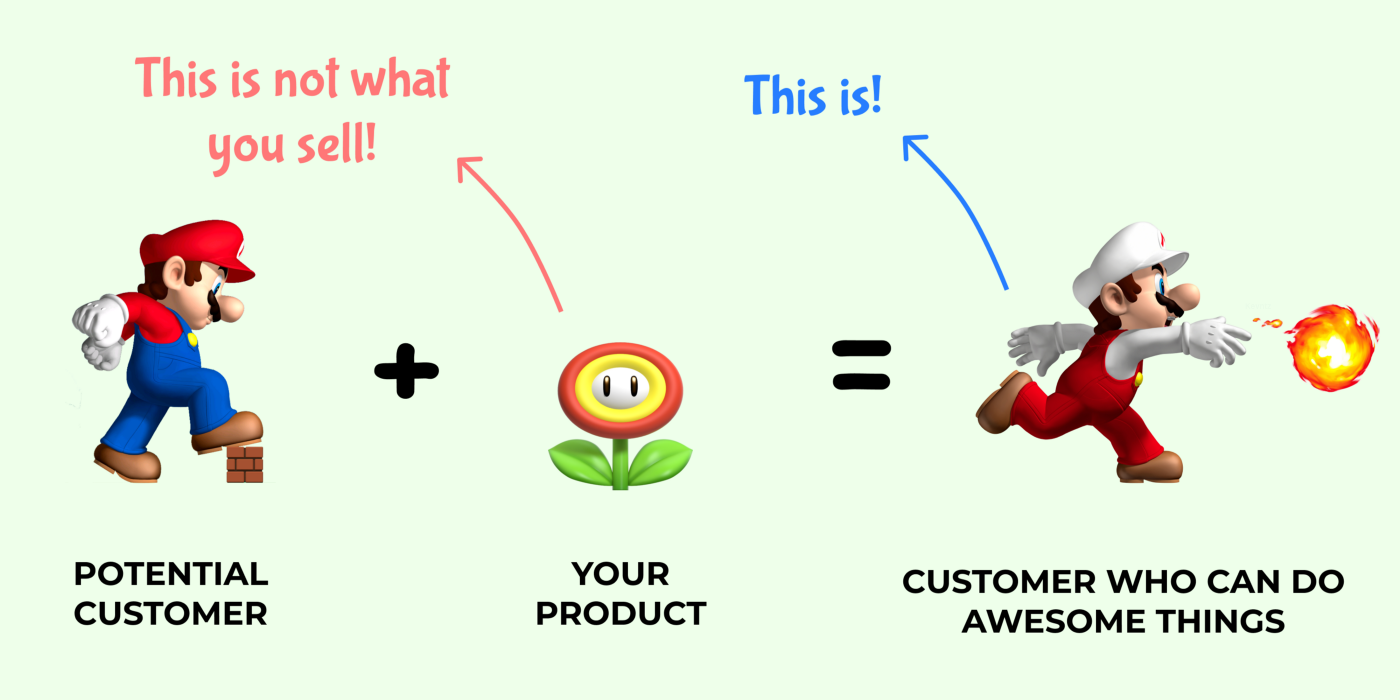
I use this Mario picture in my talks because it makes the point pretty quickly. The Fire Flower is the product. What matters to the person playing is what Mario can do with it, and the experience that opens up.
Giving the approach a name
My wife Ashlee and I came up with the name HEAR while we were on vacation, talking about where operational excellence could go next.
Yes, we talk about operational excellence outside of work. On vacation. True love 😂
I had spent my career in Strategy, Transformation, Lean & Six Sigma, but I had always used the tools and frameworks with a slightly different twist. I started with the humans involved: what they were experiencing, what mattered to them, and how they worked together.
Ashlee’s entire org took the Yellow Belt training I offered when we worked at the same company. She had noticed it too. She described it as learning process engineering from a human-first approach. That was fair. In my trainings, we were generally about 30% of the way through the class before we even got to process mapping and data collection.
We wanted a name for that approach because it wasn't one specific tool or framework. Human Experience Architecture & Research gave us a way to describe how I had been bringing those pieces together throughout my career.
I brought that conversation to MoreSteam's Best Practices for Operational Excellence conference in 2024. I had gone from being a friend of MoreSteam, to a student, to a content creator, and then to presenting there. I was excited, but I also went back and forth on whether an hour about relationships and trust was what people had come to hear.
After the talk, someone in the audience asked if I wrote at all. They said they would love to have access to a post about what I had shared. That request is what prompted me to write it down.
You have to hear people before you can HEAR the work.
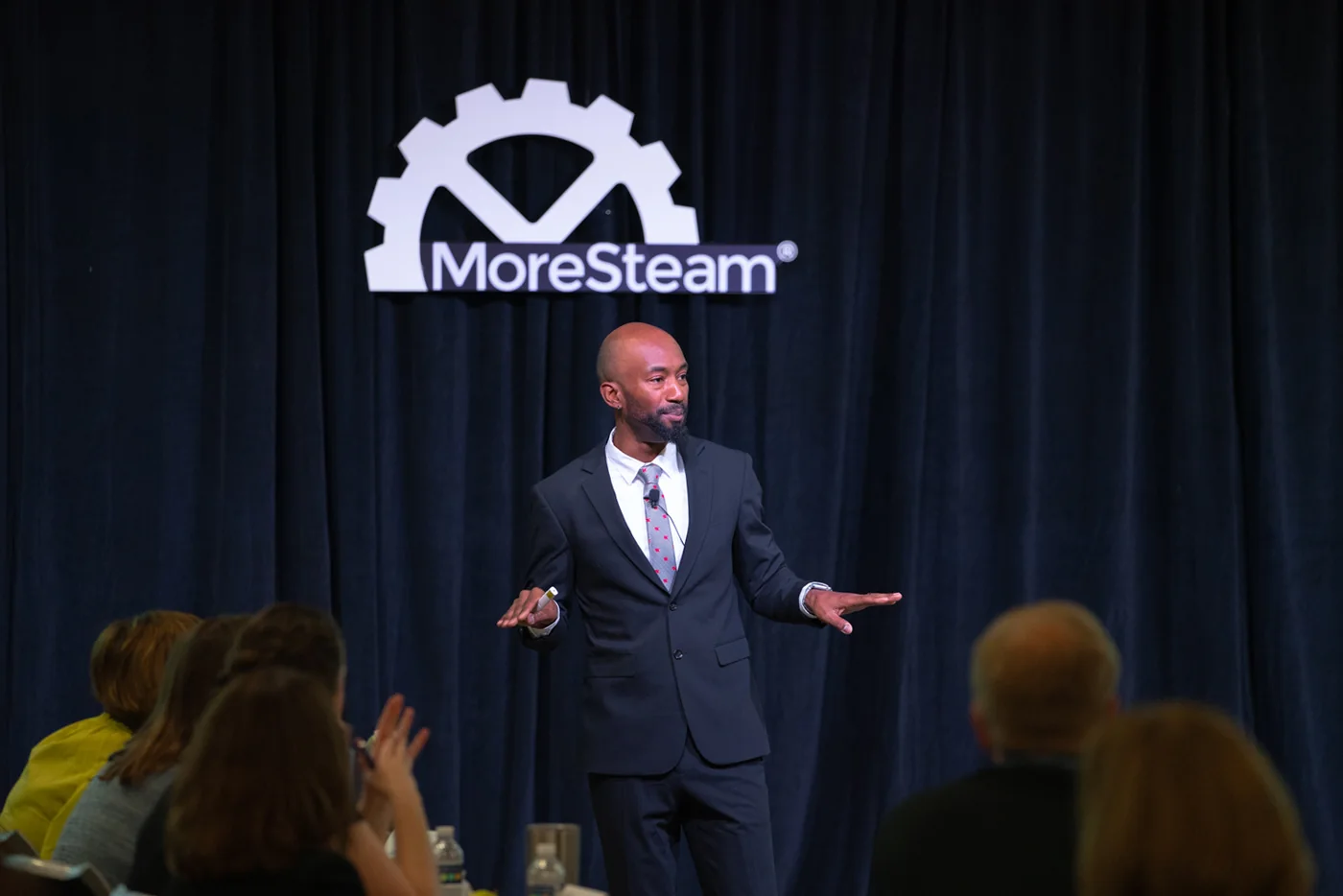
Sharing the human side of operational excellence at MoreSteam.
Even difficult experiences can be meaningful
My college roommate is someone I consider a brother. We were both inducted into the Wabash College Athletics Hall of Fame in 2024.
The funny thing is, I didn’t even actually like track that much. You’re probably thinking, how does someone end up doing something for 12 years they don’t like that much?
I had a crush on someone on the team. That was my reason for signing up. I stayed for the people, and went on to be captain of every team I was on.
We had a lot of good times at Wabash. We also spent a lot of time running ourselves into the ground at practice and working on research papers in the computer lab until 2 a.m. Repeat 200s and 550 over-distance days are no joke.
Those experiences were hard. We still wouldn't trade them.
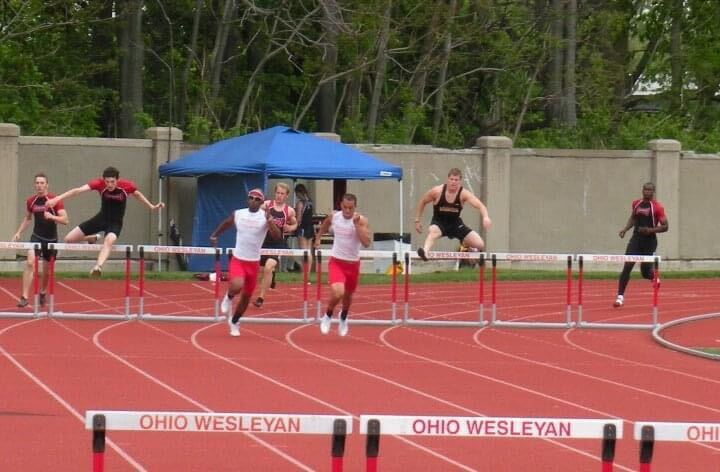
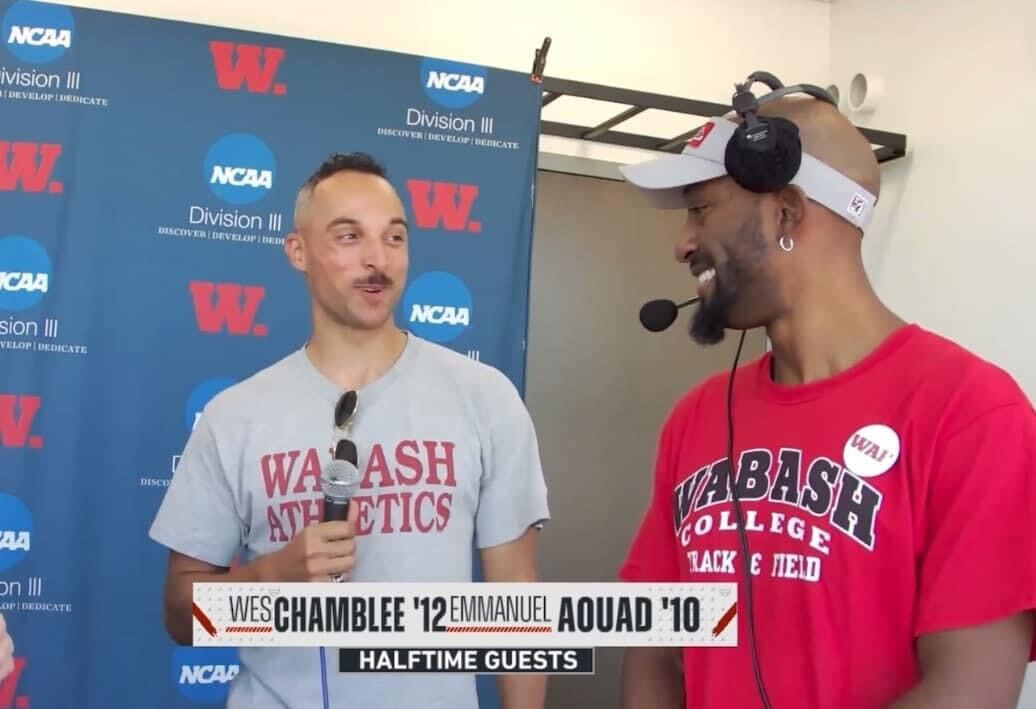
The work we put in together, and the emotions that came with it, became part of a lifelong bond. The difficult parts belong in the story as much as the celebrations.
I think about that when I think about work. People want to have experiences and share the building of those experiences with other people. A concert, a vacation, a team getting through a difficult problem, a ridiculous meme someone sends you. The setting changes, but the desire to experience something together is there.
That doesn't mean every workday needs to feel like a concert. It means the experience of doing the work deserves our attention. People should be able to see a purpose in what they are doing and have some part in improving it.
The culture I want to build
I see operational excellence as a cultural state we work toward together. People understand the purpose of their work, can see where it gets in the way of that purpose, and have the support to make it better.
Lean, Six Sigma, process maps, training programs and technology all have a place in that. I use them. But a framework doesn't give a team a reason to care by itself.
In my original talk I mentioned numbers are just humans in disguise. A cycle-time number might represent someone waiting for an answer. Rework might mean a person spending another afternoon correcting something that should have been right the first time. Hours saved mean something different when we understand what people can do with those hours.
I want to measure the work and understand the experience behind the measure. Otherwise, we can get very good at improving a number without creating an improved experience for the human at the end.
What's a more meaningful way to spend your day: improving a KPI, or knowing that your work helped someone have an experience that added something to their life? The number can help us see progress. But I want to understand the difference between someone simply receiving a product and what that product makes possible for them.
That is the thinking behind the four phases of HEARing: earning trust, ashy wins, gambling trust equity, and building an operational excellence culture. I think of it as a mountain climb. Each phase helps us reach the culture we want to build together. Once we get there, the work is to sustain it.
 Earning trust
 Ashy wins
 Gambling trust equity
 Operational excellence culture
Sustain
Earning trust
I usually spend my first few months at a new company meeting people, learning about them and their problems, and mapping how the work connects across the business. I had done the same at the company I was with when I gave the MoreSteam talk. It was one example of an approach I had been using throughout my career.
Those conversations help me understand both the people and the system they are working in. I can prepare tools that might help without immediately turning every conversation into a proposal to fix something.
Trust equity comes from caring about people's futures, showing up for them and delivering on what we commit to. Over time, those experiences give someone a reason to believe that we can help and that we have their interests in mind.
Having a good answer is useful. Having a good answer from someone you trust enough to work with is a different starting point.
I also don't want the first time someone hears from me to be when I need something from them. Learning about people has value before there is a project attached to it. Their priorities, frustrations and hopes help me understand what a useful change would look like.
You cannot fake that interest and expect it to hold up. People will eventually experience the difference between being listened to and being managed toward an answer you already chose.
Ashy wins

Sometimes the first useful thing you can do is a little ashy.
An ashy win may be rough around the edges. It may not be the complete solution you would design with unlimited time, sponsorship and attention. But it helps someone with a problem they have right now, and gives you something useful to build on together.
In one of the examples from my talk, a team asked for help with a specific value stream. I tried to introduce strategy planning, but they weren't ready for that. What helped was creating a user-experience survey that made the issues visible and brought the voice of the customer into the conversation.
The survey gave us a clearer understanding of the problem and a starting point the team was ready to work with.
There is an ego check in this phase. Am I holding out for a perfect solution because the problem requires it, or because I want to do it my preferred way?
When people need help, they need help. I have to be willing to adapt the parts of my approach that can change and explain the parts that cannot. I can keep standards without insisting that every team learn my entire playbook before I do anything useful.
Those early wins also teach me. I learn which tools fit, where the friction is, and what people actually find valuable. That makes the next recommendation better informed.
Gambling trust equity
Eventually, I will want to try something that the people I'm working with haven't tried before.
This is where the trust we've built starts to matter in a very practical way. Someone may not fully understand the framework yet, but they know how I've shown up so far. They are willing to give the idea a chance.
I've called this a “just trust me bro” moment. There is still work behind that ask.
I need to explain what I believe will happen, what could go wrong, and what we will do if it doesn't work. If I believe in the idea enough to ask people to spend their time on it, I should be willing to put my reputation behind it too.
That doesn't make the outcome certain. Being honest about uncertainty is part of the commitment.
Delivering on the gamble can mean getting a solution that helps. It can also mean following through on the exit plan we discussed at the beginning. If I said we would stop under certain conditions, then I need to be willing to stop.
The relationship takes a different hit when people discover risks they were never told about, or when the person who asked for trust disappears after things go wrong.
I want people to know what they are agreeing to and know that I will still be there when we find out how it goes.
Building an operational excellence culture
As those experiences repeat, people have something concrete to connect the methods to. They have helped solve a problem, seen a useful result and tried an unfamiliar approach with support.
That gives training, tools and templates a better place to land.
In the journey I shared with MoreSteam, early conversations and small wins helped create opportunities for a training and certification program. The point of that program was to equip people to solve their own problems. As the work expanded, I kept meeting people, earning trust and learning what they needed.
The phases overlap. A successful project with one group doesn't mean a new group owes me the same trust. Expansion means starting those relationships too.
Champions at different levels and senior sponsorship matter here. So does making the training fit the work people are trying to do. I want people to recognize how the methods can help them, rather than feel that their problems have to be reshaped to fit my training materials.
The culture becomes visible in what people do with that support: whether they raise problems, help each other understand them, try improvements and keep learning from the results. Sustaining it means continuing to support those habits and relationships after we reach that point.
 A training program should leave time for training
A training program is a good place to test whether we are supporting that culture in practice. In my “Minimize boring, maximize fun” talk, I shared an example from running training classes and coaching sessions.
As those grew, so did the work of tracking them, communicating with people and producing reports. The information was useful to leadership. Collecting and managing it also took time away from the service we were trying to provide.
I started with what the training customer needed, then built a Retool app to automate signups, communications and reporting. That let me spend more time on the training itself.
The technology choice followed an understanding of the work. The purpose was to make the training experience easier to deliver and give more attention to the parts where a human could help.
 How the pieces support each other
Data supports technology. Technology supports processes. Processes support journeys. Those journeys exist so someone can flow through a product or service experience and accomplish what matters to them.
Journey
Connects the steps someone moves through to receive that product or service.
 DiscoverFind what fits
 AccessGet what I need
 UseMake it part of my life
 HumanHave a meaningful experience
Has an experience through the product or service they receive.
Processes
Coordinate the work that makes the journey possible.
With the customer
- Explain options
- Confirm request
- Deliver service
- Follow up
Behind the scenes
- Update the offer
- Check needs
- Plan the work
- Learn and improve
Technology
Enables people to carry out those processes.
 Website
 Booking
 Work tools
 Feedback
Data
Provides the information that technology and decisions depend on.
 Offer details
- Requests
- Work records
- Feedback
Whether I am changing a data field, building an app or improving a process, I want to be able to trace that work all the way to the person it serves. What does it make possible for them? What becomes easier, more reliable or more useful? That connection gives us a reason for the technical work and a way to judge whether it helped.
That same perspective matters when we look across a larger process. An improvement to one step can push work onto someone else. A faster handoff can still leave the next person with incomplete information. We have to follow the experience far enough to know who benefits and who inherits the problem.
Efficiency, quality, revenue and risk all need attention. The customer experiences the combined result.
 Making room for the work and the side quests
This is also how I think about AI. I want it to give people more time and room to use their abilities, spend time with each other and do things they care about. That starts with understanding the work well enough to know where it can help and how we will judge the result.
If we skip those conversations, we can automate something before understanding why anyone has to do it. HEAR keeps me coming back to the person doing the work, the person receiving it and the purpose they share.
And yes, some of the space I want to create is for fun. I'm a business professional who loves taking side quests in life. Music, game development and Ninja Warrior belong in the same life as my day job.
That is part of why this matters to me. Removing work that isn't helping anyone gives people a little more of their day back. What they do with that time is part of the experience we should care about.
Ashlee and I gave the approach a name on vacation. The responsibility that comes with it shows up in ordinary conversations and commitments: listen, help with something real, be honest about the next step, and follow through.
Before I ask someone to take a journey with me, I want to understand the one they're already on.
 Where this started
This learning expands on my original HEAR article on LinkedIn and the examples from my talks. You can also watch Trust Equity: The Human Side of Operational Excellence with MoreSteam.